
NVIDIA Q3 Revenue Doubles to $115.8B as Margin Guide Dips: What It Means for NVDA
NVIDIA's fiscal third-quarter revenue rose 103% and its fourth-quarter revenue guide is higher, but gross margin is guided below Q3's level. Shares rose 4.82% in after-hours trading on Nov. 17, before the next regular session.
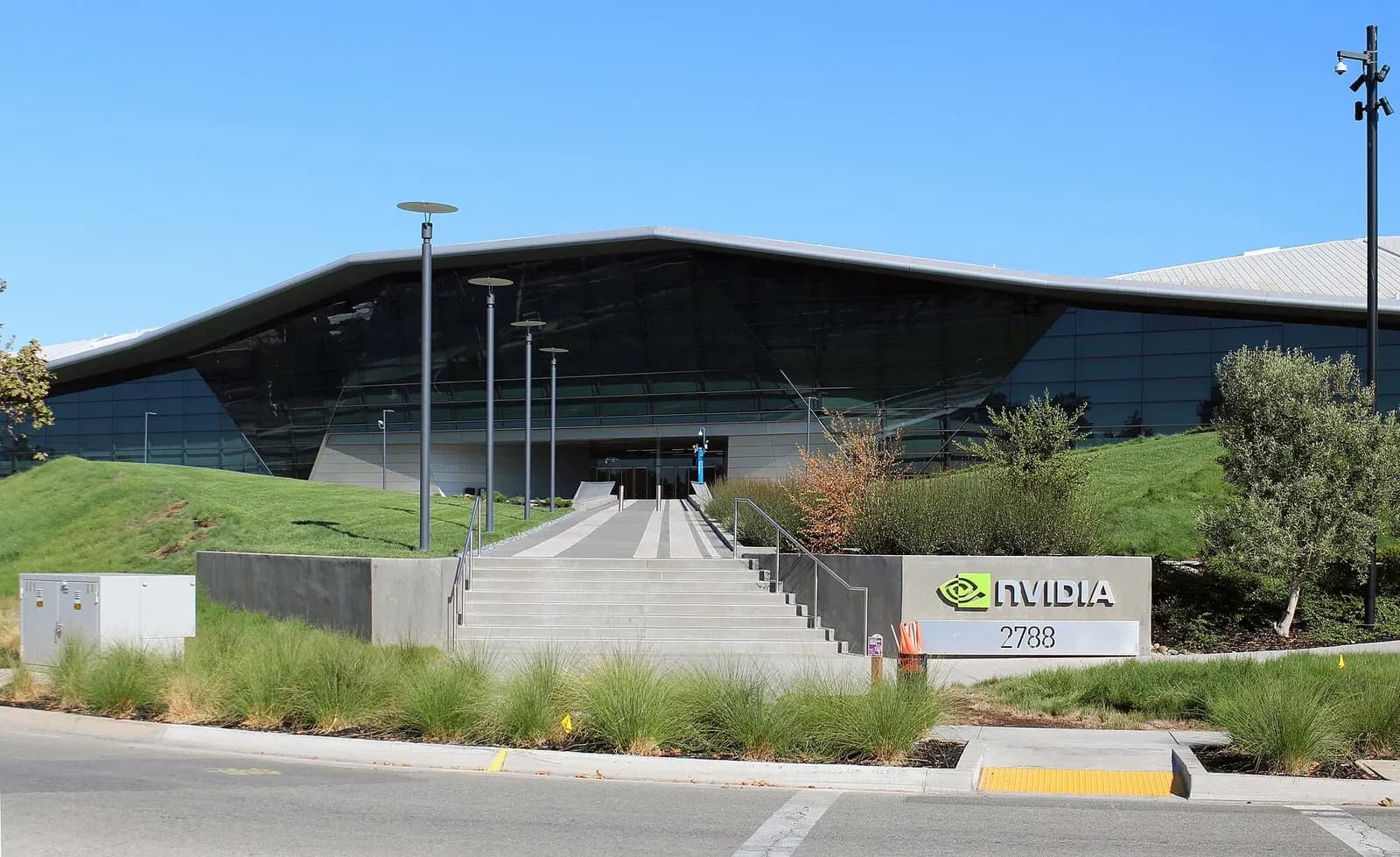
NVIDIA Corporation (NASDAQ: NVDA) reported fiscal third-quarter results at 7:01 p.m. ET on Nov. 17, in after-hours trading (the session after the 4:00 p.m. close). Revenue was $115.8 billion, up 103% from a year earlier, and non-GAAP earnings were $2.68 per diluted share. The company guided fourth-quarter revenue to $130.0 billion, plus or minus 3%.
Sales keep climbing while the margin guide steps down
Revenue grew 20% from the prior quarter, and the $130.0 billion fourth-quarter guide (the company's own forecast) is above the Q3 figure. NVIDIA guided gross margin to 71.0% to 72.0%, below the 74.8% GAAP margin of Q3, and assumes no Data Center compute revenue from China. The Nov. 18 session, the first to trade on the results, had not opened as of the last after-hours trade at 7:59 p.m. ET on Nov. 17, so the read on the stock's reaction is provisional.
After-hours shares rose 4.82%, but the start of the move is unclear
NVIDIA closed at $156.14 on Nov. 16, down 4.12% on the day. In pre-market trading on Nov. 17, it rose 0.85% to $156.92 from the prior after-hours close, on 11.82 million shares. The regular session then fell 0.93% from that pre-market close. The stock traded between $150.33 and $157.46 and closed at $155.46, down 0.44% from Nov. 16, on 301.24 million shares against a 10-day average of 341.45 million.
In after-hours trading, the stock reached $162.95 by 7:59 p.m. ET, up 4.82% from the 4:00 p.m. close and 4.36% from Nov. 16's close. The after-hours high was $163.86 and the low $154.21, on about 77.65 million shares. The SEC filing carries a 4:20 p.m. ET time stamp and the press release 7:01 p.m., so it is not clear how much of the move came before the numbers were public.
The shares came into the report after a steep slide. They fell 28.08% over the sessions from Oct. 19 to Nov. 16, and the period high was $222.19 on Oct. 21. The largest one-day drop in that stretch was 9.26% on Nov. 5, and the closes from Nov. 10 to Nov. 16 were $168.89, $173.73, $166.19, $162.85 and $156.14.
A leadership change and a new committee frame the report
NVIDIA's market value is about $3.75 trillion, with about 23.13 billion shares in the float (the shares available for public trading).
The report also arrived during a leadership change. Jensen Huang resigned as CEO earlier in November, and Colette Kress, the chief financial officer, is interim CEO. Reports on Nov. 17 said the board had ruled out bringing Huang back, while a petition backed by Elon Musk called for his return before the board finishes its investigation.
At 6:31 a.m. ET on Nov. 17, in pre-market trading, NVIDIA formed a board committee for national security and export control, chaired by director Suzanne Nora Johnson. It is expected to meet at least quarterly, and the company's national security and trade compliance teams will report to it and to the interim CEO.
What changed in the quarter
According to the company's 8-K filing, the main figures were:
- Revenue: $115.8 billion, up 20% from the second quarter and up 103% from a year ago.
- Data Center revenue: $107.6 billion, up 21% from the prior quarter and 110% from a year ago.
- Edge Computing revenue: $8.2 billion, up 14% from the prior quarter and 42% from a year ago.
- Gross margin: 74.8% on a GAAP basis and 74.9% non-GAAP.
- Earnings per diluted share: $2.70 GAAP and $2.68 non-GAAP.
Vera Rubin NVL72, NVIDIA's rack-scale computing platform, began shipping in the quarter. The company called it the fastest product ramp in its history, with racks running at CoreWeave, Google Cloud, Microsoft Azure, Oracle Cloud Infrastructure and Nebius. Kress said in the release that "Vera Rubin is off to an explosive start."
The company also announced an agreement to acquire Hugging Face.
Guidance: higher revenue, lower margin, no China compute
For the fourth quarter, which includes an extra week, NVIDIA guided to:
- Revenue of $130.0 billion, plus or minus 3%, with no Data Center compute revenue from China assumed.
- GAAP and non-GAAP gross margins of 71.0% to 72.0%, below Q3's 74.8% GAAP margin.
- Operating expenses of about $11.0 billion GAAP and $10.7 billion non-GAAP.
- A full-year fiscal 2027 tax rate of 16.0% to 18.0%, excluding discrete items.
Buybacks and dividend
The board approved a $150 billion increase to the buyback (share repurchase) authorization in September, with no expiration. NVIDIA returned $28.1 billion in the quarter through repurchases and dividends, and had about $227.3 billion left under the authorization at quarter end.
The next quarterly dividend of $0.25 per share is payable on Dec. 23 to holders of record on Dec. 2.
What comes next
- Nov. 18: the first regular session to trade on the results and the guidance.
- Dec. 2: dividend record date. Dec. 23: payment date.
- The board's investigation and the question of who leads the company remain open, and the new export committee is due to meet at least quarterly.
- Fiscal fourth-quarter results will be measured against the $130.0 billion revenue guide and the 71.0% to 72.0% gross margin range.
Bottom line
Revenue more than doubled from a year earlier, Data Center revenue rose 110%, and the company guided to further sequential growth. Against that, gross margin is guided lower and the forecast assumes no China data center compute revenue.
The 4.82% after-hours gain followed a 28.08% slide over the prior four weeks. The Nov. 18 session is the first full test of how buyers and sellers price the results.
This article was processed by WSN Finance AI Analysis and prepared by WSN Editors based on financial analysis.
This article is for informational purposes only and is not investment advice.